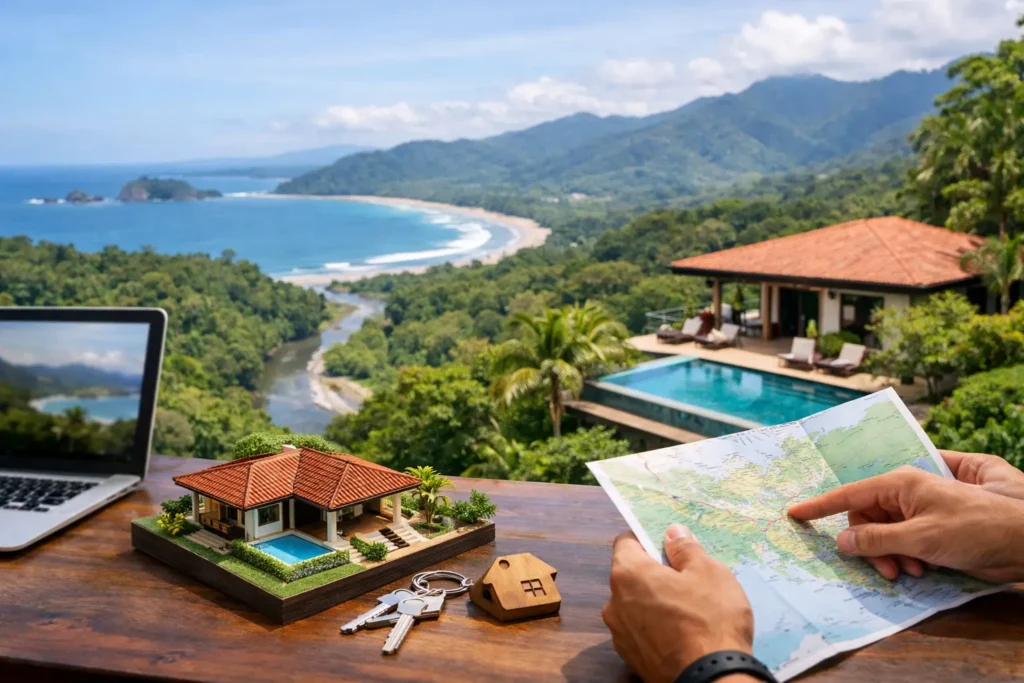
A home with a Pacific sunset, mountain air, or a garden full of fruit can feel wonderfully far from life in the United States. Yet buying it should not feel distant or uncertain. Knowing how to buy a house in Costa Rica from the US means pairing that Pura Vida vision with careful local due diligence, a clear budget, and professionals who can explain each step in English.
Foreigners can generally own Costa Rican real estate with the same ownership rights as Costa Rican citizens. That accessibility is one reason the country attracts retirees, families, remote professionals, and investors. The practical reality, however, is that each property, region, title history, and payment structure deserves close attention before money changes hands.
Start with the lifestyle and location
Costa Rica is small on a map, but its regions can offer very different daily lives. A beach home may provide ocean access and rental appeal, while a mountain property can bring cooler temperatures, privacy, and expansive views. The best choice depends on how you expect to use the property: a permanent home, seasonal residence, vacation rental, farm, or long-term investment.
Before focusing only on photos and price, consider practical questions. How close do you want to be to a hospital, grocery store, airport, school, or reliable internet? Are you comfortable with a steep access road or a more rural setting? Does the rainy season affect the route to the home? A property that feels beautifully secluded during a viewing may require more planning for maintenance, deliveries, or everyday errands.
In areas such as Pérez Zeledón, buyers may find a compelling balance of green mountain landscapes, useful services, and access to the southern Pacific coast. Along the Costa Pacifica, the experience can range from lively beach communities to private jungle estates. Local knowledge matters because two homes only a few kilometres apart can have very different road access, water sources, zoning context, and resale audiences.
Build a realistic Costa Rica buying budget
The listed price is only part of the investment. A sensible budget leaves room for legal work, registration costs, inspections, escrow fees, property insurance, furnishings, and any immediate improvements. Closing costs vary by transaction, but buyers often plan for roughly 3% to 5% of the purchase price, depending on the property and services required.
If you will finance the purchase, begin early. Costa Rican bank financing can be available in some situations, but approval standards, down payment requirements, interest rates, and documentation may differ substantially from US lending. Many international buyers purchase with cash, arrange financing in their home country, or use private financing where appropriate. None of these routes is automatically better – the right approach depends on your income, liquidity, tax planning, and appetite for exchange-rate exposure.
Most property prices are quoted in US dollars, even though Costa Rica’s national currency is the colón. Confirm the currency of the agreed purchase price, deposits, fees, and any financing arrangement before signing. It is also wise to ask how funds will be received and documented, as banks and escrow providers must comply with anti-money-laundering requirements.
How to buy a house in Costa Rica from the US: assemble your team
You can begin researching and even make an offer while in the US, but an in-person visit is strongly recommended before committing to a home. A dedicated buyer representative can arrange efficient viewings, explain local market differences, and help you compare properties beyond their online presentation.
You will also need an independent Costa Rican real estate attorney. Your attorney should represent your interests, not simply prepare documents for the seller. They will review the title and registry information, confirm the legal owner, investigate liens or restrictions, review plans and permits where relevant, and prepare or review the purchase agreement and closing documentation.
For many buyers, a reputable escrow provider is equally valuable. Rather than wiring a deposit directly to an individual seller, funds can be held under defined conditions until the contract requirements are met. This creates a clear paper trail and helps protect both parties during the transaction.
Your real estate representative, attorney, escrow provider, surveyor, inspector, and accountant each have distinct roles. Clear communication among them is one of the best ways to keep an international purchase organized.
Look beyond the view during due diligence
Costa Rica has exceptional homes and land, but property conditions can be more varied than buyers expect in North America. A detailed review should go beyond the house itself.
Your legal due diligence should confirm that the property is properly registered and that its boundaries align with the cadastral survey. It should also identify mortgages, annotations, easements, rights of way, and municipal issues that could affect use or resale. If the property is held by a corporation, your attorney should investigate the corporation as well as the real estate.
Physical due diligence is just as significant. Arrange a professional inspection when possible, particularly for roofs, drainage, electrical systems, septic systems, retaining walls, pools, water infrastructure, and access roads. Tropical weather is demanding. Small maintenance issues can become expensive if water management, ventilation, or construction quality has been overlooked.
Ask direct questions about water. Is service supplied by a public provider, a legally registered community association, or a private well? Is the water availability sufficient for the house, gardens, guest accommodations, or future construction you have in mind? For rural land, also review terrain, road access, flood exposure, soil conditions, and any protected areas.
Coastal buyers need additional care. Some beachfront and near-beach properties may fall within Costa Rica’s Maritime Zone, where concession rules can apply rather than standard fee-simple ownership. These properties are not necessarily unsuitable, but they require specialized legal review and a clear understanding of the concession’s status, transferability, and permitted use.
Make an offer with protections built in
Once you have selected a property, the offer should set out more than the price. It should identify the deposit amount, closing date, items included in the sale, payment method, and the conditions that must be satisfied before you are obligated to close.
Useful conditions may include satisfactory title review, inspection results, confirmation of water and utilities, financing approval if applicable, and seller delivery of agreed documents. The timing should be realistic. An overseas buyer may need additional time to organize banking documents, coordinate signatures, or travel for final arrangements.
Do not treat a deposit as a casual expression of interest. Understand exactly when it becomes non-refundable, where it will be held, and what happens if due diligence reveals a significant issue. A well-written agreement protects the buyer’s position while showing the seller that you are serious and prepared.
Move funds carefully and prepare for closing
US buyers should never rely on an email instruction alone when transferring funds. Wire fraud is a genuine risk in cross-border transactions. Confirm banking instructions through a known phone number, preferably with a live conversation, and verify any change in instructions independently.
Depending on the transaction, closing can be completed in person or through a properly drafted power of attorney. Your attorney will explain the documents, arrange the deed transfer before a Costa Rican notary public, and submit the transaction for registration in the National Registry. Registration is a vital final step because it formally records ownership.
Some buyers hold title personally, while others use a Costa Rican corporation. A corporation may offer practical advantages for shared ownership, succession planning, or asset management, but it also brings annual filings, taxes, and compliance responsibilities. This is a decision to make with legal and tax advice tailored to your circumstances in both Costa Rica and the US.
Plan for the first months of ownership
Closing is a milestone, not the end of the practical work. You may need help arranging electricity, water, internet, insurance, security, staff, property management, and maintenance. If you plan to rent the home, investigate local licensing, tax obligations, management standards, and realistic occupancy expectations before relying on rental income.
For a primary or seasonal residence, build a local support network early. A trusted caretaker, contractor, gardener, and accountant can make ownership far easier, particularly if you will spend part of the year outside Costa Rica. Keep copies of all closing documents, utility records, invoices, and tax filings in an organized digital file.
The strongest purchase is not always the one with the lowest price or the most dramatic view. It is the property whose legal standing, physical condition, access, and lifestyle fit have all been tested carefully. With attentive representation and the right local professionals, Roca Realty CR can help turn a Costa Rican home from a distant idea into a secure place to arrive, settle in, and enjoy.