A move to Costa Rica is rarely just about warmer weather. For many Canadians, it is a decision to trade long winters and crowded routines for rainforest views, a slower pace, and a home that supports a different kind of life. This Costa Rica relocation guide focuses on the decisions that make that dream practical: where to live, how to buy well, and what to arrange before and after closing.
The country offers extraordinary variety in a relatively compact area. A mountain home near Pérez Zeledón can feel entirely different from a coastal property near Uvita or a rural estate in the Osa region. The right move begins with clarity about your daily life, not simply the view from a listing photo.
Start With the Life You Want to Live
Before comparing properties, define what a successful weekday in Costa Rica looks like. Retirees may prioritize proximity to healthcare, groceries, dining, and an established international community. Families may need reliable schools, road access, and enough space for visiting relatives. Remote professionals should test internet availability, mobile coverage, and power reliability at the specific property, not just in the surrounding town.
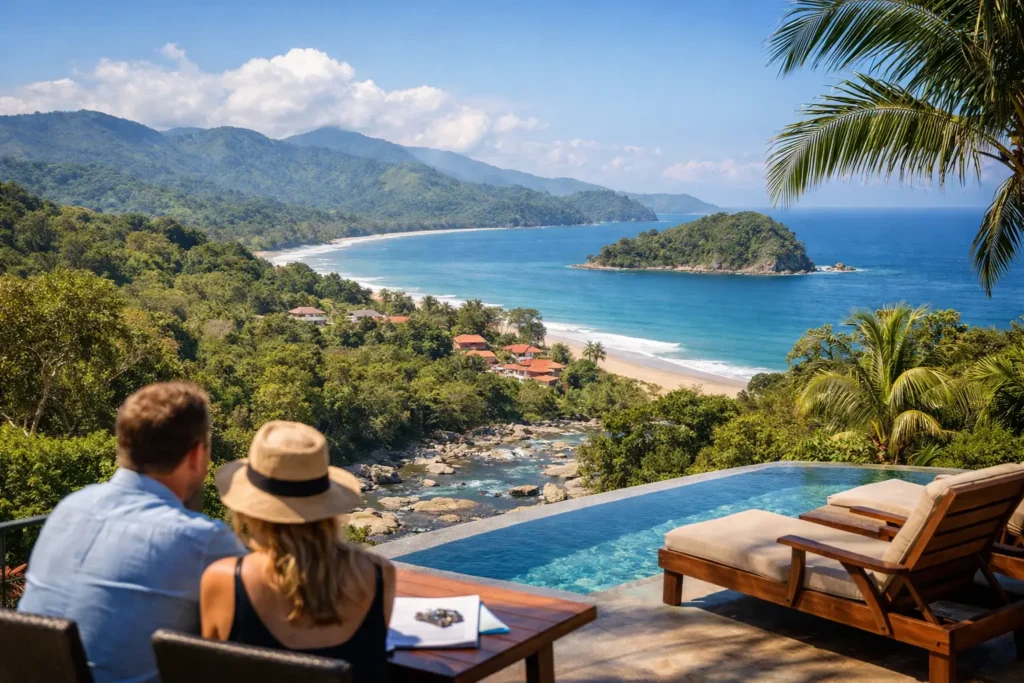
The Pacific Coast appeals to buyers who want beaches, restaurants, tourism energy, and rental potential. Areas around Uvita offer access to the coast while still providing jungle privacy and mountain views. Pérez Zeledón, centred around San Isidro de El General, often suits buyers seeking a practical year-round base with services, farmland, cooler elevations, and access to both mountains and beaches.
Rural properties can provide remarkable privacy, water features, and room to grow food or develop a hospitality project. They can also require greater attention to access roads, drainage, security, maintenance staff, and travel time to services. There is no universally best region. There is only the region that best matches your budget, mobility, work, and tolerance for tropical logistics.
Visit Before You Commit
A reconnaissance trip is one of the best investments a future resident can make. Stay in more than one area, drive the roads after rain, shop for groceries, visit clinics, and take the route from a possible home to the places you expect to use each week. A home that feels wonderfully secluded on a sunny afternoon may feel too remote after dark or during the green season.
View properties with a clear brief. Consider elevation, airflow, neighbouring development, water supply, road condition, internet options, and the cost of maintaining gardens, pools, gates, and septic systems. In tropical climates, details such as roof condition, drainage, retaining walls, and ventilation are not minor items. They directly affect comfort and long-term ownership costs.
This is also the time to distinguish between a vacation property and a permanent home. A dramatic hillside villa may be ideal for several weeks a year, while a flatter property closer to town may be more convenient for full-time living. Neither choice is better, but the distinction should be honest from the beginning.
Understand How Foreign Buyers Can Purchase
Foreign nationals generally have the same property ownership rights as Costa Rican citizens, with limited exceptions in certain concession-zone coastal areas. Many buyers purchase in their personal name, while others use a Costa Rican corporation for estate planning, shared ownership, business purposes, or privacy considerations. The appropriate structure depends on your circumstances and should be reviewed with an independent Costa Rican lawyer and tax adviser.
A secure purchase process involves more than agreeing on a price. Your legal representative should review the title history, survey, municipal status, taxes, liens, access rights, water availability, land-use considerations, and any restrictions affecting the property. For homes in a condominium or gated community, review the rules, fees, reserve planning, and permitted rental use.
If you are purchasing land, due diligence becomes even more important. Confirm that the land can support your intended use, whether that is building a residence, operating a small lodge, planting crops, or holding it as an investment. Topography, water, environmental considerations, public-road frontage, and utility access can materially change the value of a parcel.
Budget Beyond the Listing Price
Your purchase budget should include closing costs, legal fees, inspections, possible corporate costs, insurance, furnishing, and early repairs or improvements. Depending on the property and transaction structure, buyers should plan for costs beyond the negotiated price rather than treating the listing amount as the complete investment.
Ongoing costs also vary widely. A modern home in a managed community may have predictable association fees but less flexibility. A private estate may avoid monthly community fees while requiring landscaping, caretaking, road upkeep, pool service, and more hands-on management. Ask for utility history and realistic maintenance expectations during the evaluation stage.
Plan Banking, Currency, and Income Early
Canadian buyers often underestimate the administrative side of moving funds and establishing local financial arrangements. Banks may require extensive documentation to meet know-your-client and anti-money-laundering requirements. Prepare clear records showing the source of funds, identification, proof of address, and supporting documents for major transfers.
Currency movement deserves a plan as well. Exchange-rate changes between Canadian dollars, US dollars, and Costa Rican colones can affect both the purchase and your monthly spending. Many real estate transactions are priced in US dollars, while regular living expenses may involve colones. A banking-informed local team can help you understand the practical paperwork and timing, but personal tax and financial advice should come from qualified professionals familiar with your residency.
Do not assume that opening a local account will happen immediately or solve every payment need. Keep adequate accessible funds, maintain your Canadian financial arrangements during the transition, and avoid scheduling a closing around a transfer you have not fully prepared.
Residency, Healthcare, and Tax Questions
Owning property does not automatically grant Costa Rican residency. Some people live part-time as visitors, while others pursue residency categories based on pension income, investment, family ties, or other qualifying circumstances. The best path depends on how long you plan to stay, where your income originates, and your family situation.
Healthcare is another personal calculation. Costa Rica has public healthcare through the Caja Costarricense de Seguro Social, commonly called the Caja, alongside private clinics and hospitals. Some residents use a combination of both. Availability, wait times, insurance coverage, and proximity to care can differ by region, so consider health needs before choosing a remote location.
Tax residency, Canadian obligations, business income, and rental income require professional cross-border advice. A thoughtful relocation plan does not rely on general online guidance for these decisions. Get advice tailored to your citizenship, income sources, assets, and intended time in each country.
Settle In With a Property Transition Plan
Closing is a milestone, not the finish line. New owners often need help arranging utilities, internet, insurance, household staff, security systems, furnishing deliveries, and reliable local service providers. If you will not be in Costa Rica year-round, arrange property management before you leave. Humidity, heavy rain, vegetation growth, and occasional power interruptions make an unattended tropical home a poor candidate for a passive ownership approach.
Build relationships in your new community at a comfortable pace. Learn basic Spanish, even if you work with English-speaking professionals. Understand local service schedules, rainy-season driving conditions, and the culture around appointments and personal referrals. Patience goes a long way, particularly outside major urban centres.
Roca Realty CR supports buyers through this transition with local property knowledge, clear English communication, and practical coordination from viewings through closing and early settling-in needs. The value of experienced representation is not simply finding a beautiful property. It is understanding what that property will ask of you after the keys are in hand.
A Costa Rica Relocation Guide Starts With Good Questions
The strongest purchase decisions usually come from buyers who take their time. They ask about water before landscaping, road access before views, legal status before future plans, and everyday convenience before a short-term emotional reaction. Costa Rica can deliver the Pura Vida lifestyle many people imagine, but it rewards preparation.
Choose a home that fits the life you will actually lead, surround yourself with qualified local professionals, and leave room in your timeline for the country to reveal its rhythms. That is how a relocation becomes not only an exciting purchase, but a secure and lasting place to belong.