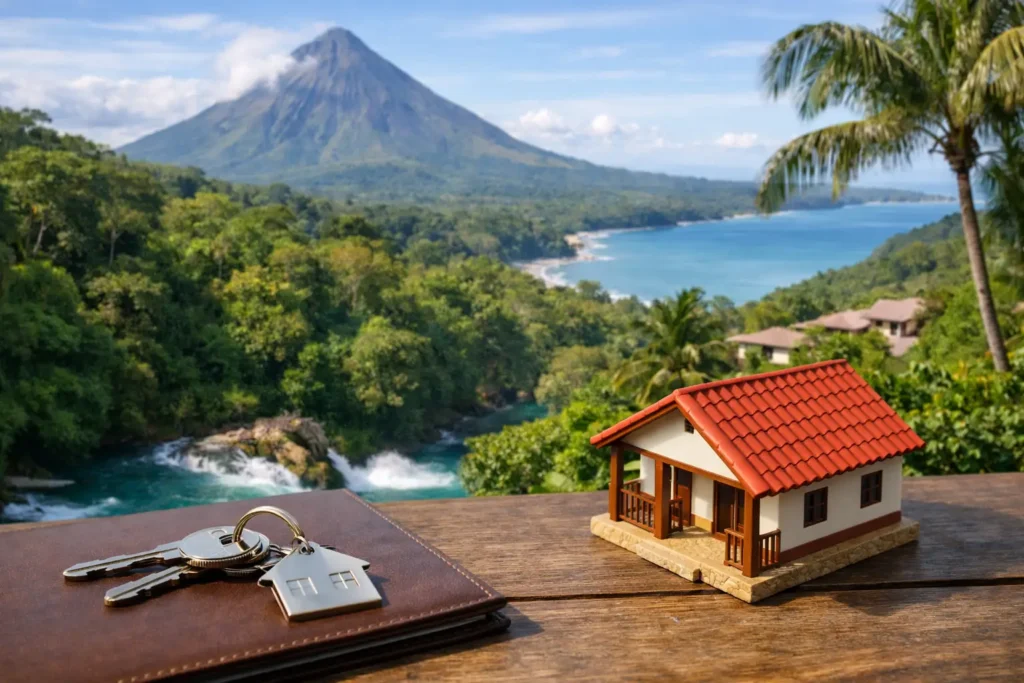
A home overlooking the Pacific, a private parcel near the rainforest, or a mountain property in Pérez Zeledón can be a meaningful step toward a life in Costa Rica. But does buying property in Costa Rica give you residency? Not automatically. Foreigners may own real estate in Costa Rica, yet property ownership and immigration status are two separate processes.
The good news is that a qualifying real estate purchase can support an application for investor residency. The distinction matters. Buying any property, at any price, does not itself grant a resident card or replace the immigration application. For buyers planning to retire, spend most of the year here, operate a local business, or make Costa Rica their long-term home, it is worth structuring the purchase with both goals in mind from the beginning.
Does buying property in Costa Rica give you residency?
Costa Rica generally gives foreign buyers the same ownership rights as Costa Rican citizens, with limited exceptions such as certain concession-zone properties near the coast. You can purchase a home, land, farm, commercial building, or condominium in your own name or through a Costa Rican corporation. None of those options automatically creates residency.
However, property can be the basis for temporary investor residency if the documented investment meets the current qualifying threshold and the applicant satisfies immigration requirements. Under the investor category, the investment has generally needed to be at least USD $150,000. Real estate may qualify, provided its value and ownership can be properly documented.
Rules, evidence requirements, fees, and processing practices can change. Before relying on an investment for immigration purposes, confirm the current requirements with a qualified Costa Rican immigration professional. A real estate brokerage can help coordinate the property-side documents and keep the purchase process organized, but it should not replace legal immigration advice.
What investor residency means in practice
Investor residency is a temporary residency category. It is designed for people making a qualifying investment in Costa Rica, which may include real estate and certain other approved investment types. It is not the same as citizenship, nor does it turn a tourist visit into permanent legal residence on the day a property closes.
After approval, a resident normally receives a DIMEX identification card and must maintain the conditions of the category. Renewals are required, and an investor must be able to show that the qualifying investment remains in place. If you sell the property that supported the application, you may need to replace that investment or change residency categories before your next renewal.
Investor residency can suit a buyer who has already chosen a substantial property as part of a long-term Costa Rican plan. It may be less suitable for someone purchasing a modest vacation home below the threshold, or for a family whose main qualifying income is a pension or remote employment rather than investment capital.
The property value is only one part of the file
A purchase price at or above USD $150,000 is a helpful starting point, but it is not enough to assume approval. Immigration authorities need a clear paper trail showing the nature, value, and ownership of the investment. The property must be properly registered, and the purchase structure must make the applicant’s qualifying interest clear.
This is where good preparation becomes valuable. A buyer may acquire property personally, through a corporation, or with more than one owner. Each option can have different implications for estate planning, liability, banking, taxes, and immigration documentation. There is no one structure that is right for every buyer. The practical choice depends on who will own the property, how it will be used, and whether residency is a primary objective.
For example, a couple purchasing a USD $300,000 home may each expect to qualify separately. That outcome should not be assumed without professional advice. The ownership percentages, investment attribution, and family-dependant rules need to be reviewed before closing rather than corrected afterwards.
Documents and timing: plan before you close
Property transactions and residency applications move on different timelines. A Costa Rican purchase usually involves due diligence, a formal purchase agreement, funds planning, closing before a notary, and registration in the National Registry. Residency adds another set of documents, many of which are obtained in your home country and may need apostilles or consular legalization, as well as Spanish translations.
Common residency documentation can include a birth certificate, police clearance, passport copies, proof of the investment, registry certifications, corporate documents where applicable, photographs, and completed immigration forms. Dependants may require marriage or birth certificates. Specific requirements vary by case and nationality, so documents should be checked before they are ordered. Some records have limited validity periods, and an expired police certificate can delay an otherwise well-prepared application.
It is also sensible to decide early whether the property will be purchased with cash, financed privately, or held by a company. Costa Rican banks and compliance teams may ask for evidence of the source of funds. Keeping bank statements, transfer records, sale documents, and other supporting records in an orderly file can help with both closing and later immigration paperwork.
A buyer who starts the residency conversation only after closing may still have a viable route. Yet beginning earlier can prevent avoidable complications, especially when the property will be owned by a corporation, acquired jointly, or used as a rental or hospitality investment.
Other residency routes may fit your plan better
Buying property is not required to become a Costa Rican resident. Many people own a home here and qualify through a different category that better reflects their finances and lifestyle.
Pensionado residency is often considered by retirees who can demonstrate a qualifying lifetime pension, commonly at least USD $1,000 per month. Rentista residency can be relevant for applicants with stable income or sufficient capital, subject to the applicable financial requirements. Costa Rica also offers a digital nomad programme for eligible remote workers, though it has a different purpose and terms from residency.
The right route depends on more than the home you want to purchase. Consider how long you expect to live in Costa Rica, whether you will work locally, whether a spouse or children will apply with you, and how predictable your income will be. An investor category can make excellent sense for a larger property investment. A pensionado or rentista application may be more direct for a retiree purchasing a lower-priced home.
Ownership, residence and the right to work
Residency status also affects what you can do once you are here. Owning a property does not by itself grant permission to take employment in Costa Rica. Likewise, temporary residency categories can have restrictions that matter to people intending to manage a business, provide services locally, or work for a Costa Rican employer.
This does not mean foreign owners cannot invest. Many purchase rental homes, agricultural land, small hotels, or commercial property. It does mean that the ownership structure, operating model, tax obligations, licences, and work permissions should be reviewed carefully. A beautiful property can be an excellent investment, but it should be paired with a plan that fits Costa Rican rules rather than assumptions brought from home.
A practical way to buy with residency in mind
Start with the lifestyle and investment decision, not just the immigration threshold. A USD $150,000 purchase that does not suit your location, access needs, maintenance budget, or long-term plans is rarely a good choice. In the Southern Zone, for instance, buyers may find very different opportunities between a walkable coastal home, a secluded Uvita acreage, and a cooler mountain property near Pérez Zeledón.
Once you have identified the right property, bring the key professionals into the conversation early: a reputable real estate representative, an independent Costa Rican real estate attorney and, where residency is planned, an immigration specialist. They can review title, survey boundaries, municipal matters, access, utilities, concession considerations, corporate ownership, and the documents needed to support your intended residency route.
At Roca Realty CR, we believe an international purchase deserves clear communication before, during, and after closing. The strongest result is not simply receiving the keys. It is arriving with a property you understand, a transaction file in order, and a realistic plan for building your Pura Vida life with confidence.