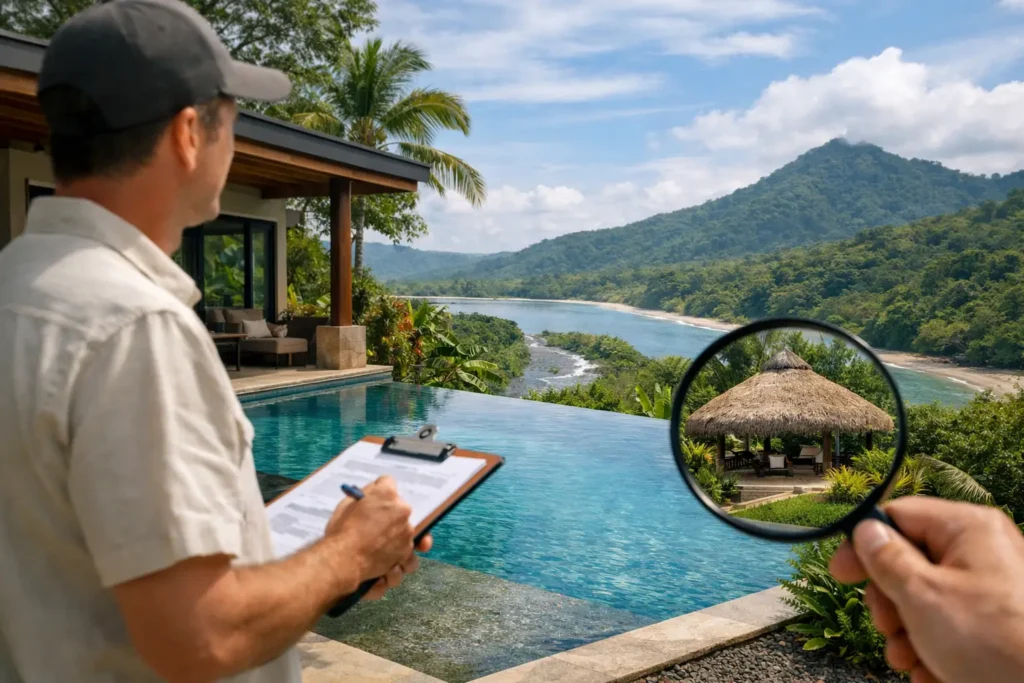
A beautiful view can make almost any property feel like the right one. But when you inspect Costa Rica property, the details beyond the view are what protect your lifestyle, budget, and long-term investment. A lush parcel near Uvita, a mountain home in Pérez Zeledón, or a private farm near San Vito may each offer something exceptional, yet each comes with practical questions that need clear answers before an offer is made.
For international buyers, a thoughtful inspection is not about finding a perfect property. It is about understanding the property as it truly operates: in dry season and rainy season, with its current access, utilities, construction condition, legal boundaries, and future potential. The right local professionals can help turn a Pura Vida dream into a well-prepared purchase.
Start With Access, Location, and the Real Drive
Online maps and listing photos are useful, but they do not replace a drive to the property. Road conditions can change quickly by region, especially on rural roads, mountain routes, and areas with high rainfall. Drive the full route from the nearest town, grocery store, medical services, school, beach, or airport that matters to your plans.
Ask practical questions. Is the final section public road or private access? Who maintains it? Does it require a four-wheel-drive vehicle during part of the year? Is there a recorded right of way if the property sits behind another parcel? A peaceful home on a steep road may be ideal for a seasonal retreat, but less suitable for a family planning daily school runs or a buyer who expects frequent guests.
Visit at more than one time of day if possible. Morning can reveal traffic, evening can show lighting and neighbourhood activity, and a visit during rain can tell you far more about drainage than a sunny-day showing ever will. If you are buying remotely, request current videos of the approach road, entry gate, driveway, and immediate surroundings rather than relying only on polished listing photography.
How to Inspect Costa Rica Property for Water
Water deserves close attention in Costa Rica, particularly for land, rural homes, farms, and properties intended for rentals or hospitality use. Do not simply ask whether water is available. Ask where it comes from, whether the supply is legal and reliable, how it is delivered to the property, and whether the existing system can support your intended use.
A property may be served by a local ASADA water association, AyA public water service, a registered well, or another approved source. Each arrangement has different considerations. For vacant land, confirm whether a formal water availability letter can be obtained for the planned construction. For an existing house, ask about water pressure, storage tanks, pumps, filtration, and any history of shortages.
Walk the site with water in mind. Look for natural drainage routes, retaining walls, culverts, erosion, and low points where runoff may collect. On a sloped property, good drainage design is not a cosmetic feature. It protects roads, foundations, gardens, septic systems, and usable outdoor space.
If a property has a spring, creek, or well, confirm the relevant rights, registrations, permits, and maintenance requirements with qualified local guidance. Water features can add remarkable beauty and value, but they should never be assumed to provide unrestricted development potential.
Examine Construction With a Tropical Climate in Mind
Costa Rica’s climate is generous to gardens and demanding on buildings. Humidity, intense sun, wind, salt air near the coast, heavy rainfall, insects, and seismic activity all influence how a home should be built and maintained.
During a viewing, look beyond finishes. Open cabinets and closets for signs of moisture. Check ceilings, window frames, exterior walls, decks, gutters, and roof lines. Pay attention to musty odours, fresh paint in isolated areas, visible cracks, uneven floors, or water marks. None of these automatically means a property should be avoided, but they are reasons to investigate further.
Ask when the roof was installed or last repaired, what materials were used, and whether there are maintenance records. A well-built home may still need routine roof care, sealing, painting, drainage work, or replacement of exterior hardware. Coastal properties also deserve a close look at corrosion on railings, gates, electrical fixtures, and air-conditioning equipment.
For a serious purchase, arrange an inspection with an appropriate qualified professional. A real estate agent can help you identify questions and coordinate access, but an independent inspector, engineer, architect, or specialist should assess the technical condition of the structure where needed. This is especially valuable for older homes, large estates, hillside construction, pools, retaining walls, commercial spaces, and renovation projects.
Confirm Boundaries, Land Shape, and What You Can Use
In Costa Rica, the visible fence line is not always the legal boundary. A neighbour’s garden, a creek, a road, or a row of trees may look like a clear division, yet the registered property dimensions and cadastral plan must be reviewed carefully.
Walk the perimeter when terrain permits. Notice whether boundary markers are visible, whether neighbouring uses align with expectations, and whether there are occupied areas that appear outside the property line. On larger land parcels, consider a current survey if boundaries are unclear or if your plans depend on a precise building area, agricultural use, subdivision potential, or future resale.
The shape and topography of land matter as much as its total size. Five hectares of steep forest and five hectares of mostly usable pasture offer very different possibilities. Ask which areas are buildable, which areas are protected, where utilities can realistically reach, and whether there are streams, easements, public road setbacks, or slope limitations that affect your plans.
A property marketed as suitable for a guest house, cabins, farming, or a small tourism project should be reviewed according to that specific use. What is possible depends on zoning, permits, water, access, environmental considerations, and municipal requirements. Avoid making decisions based solely on future-use assumptions.
Test Utilities and Everyday Function
A house can be visually impressive and still create daily frustration if the basics are poorly planned. Test water pressure where possible, check cellular signal and internet options, and ask about electricity service, backup power, septic maintenance, and garbage collection.
Internet is particularly important for remote professionals and rental owners. Availability can differ from one road to the next, so ask which provider serves the exact location, what speed is currently installed, and whether the connection has been dependable. If high-speed service is essential to your work, verify it directly rather than accepting a general statement that the area has internet.
For properties with pools, solar systems, security cameras, electric gates, generators, or sophisticated water systems, request information about operating costs, warranties, service providers, and maintenance schedules. These amenities can make tropical living more comfortable, but they also need capable local support.
Pair the Physical Inspection With Due Diligence
A physical visit is only one part of a secure purchase. Before moving forward, legal and administrative due diligence should confirm title status, registered ownership, liens or encumbrances, municipal information, taxes, corporate details where applicable, and the relationship between the registered property, cadastral plan, and improvements on site.
Costa Rica welcomes foreign buyers, and foreigners generally enjoy the same ownership rights as Costa Rican citizens. Still, the purchase process is different from that in Canada. It should be handled with an independent Costa Rican attorney and a clear understanding of the transaction structure, closing documents, escrow arrangements where applicable, and ongoing ownership responsibilities.
This is where a prepared buyer representative adds genuine value. Roca Realty CR helps clients organize viewings, ask the right property-specific questions, and coordinate the local steps that can feel unfamiliar from abroad. Good guidance does not replace your lawyer or inspector. It helps ensure the right people are involved at the right time and that important questions are not left until closing.
Know When to Walk Away or Renegotiate
Not every concern is a deal-breaker. A dated kitchen, rough driveway, ageing roof, or limited landscaping may simply be a budget and planning issue. The key is knowing whether the condition, cost, and inconvenience fit your goals.
More serious concerns include uncertain legal access, unclear water availability, major unpermitted construction, unresolved boundary issues, material structural defects, or a property whose actual limitations conflict with the reason you wanted it. A disciplined inspection gives you room to negotiate, request further documentation, adjust your offer, or continue searching with confidence.
The best Costa Rica properties reward buyers who look closely. Take time to stand on the land, listen to the surroundings, test the practical details, and let qualified local professionals verify what cannot be seen. When the home, land, and documentation tell the same reassuring story, you can move forward with much greater confidence in the life you are building here.