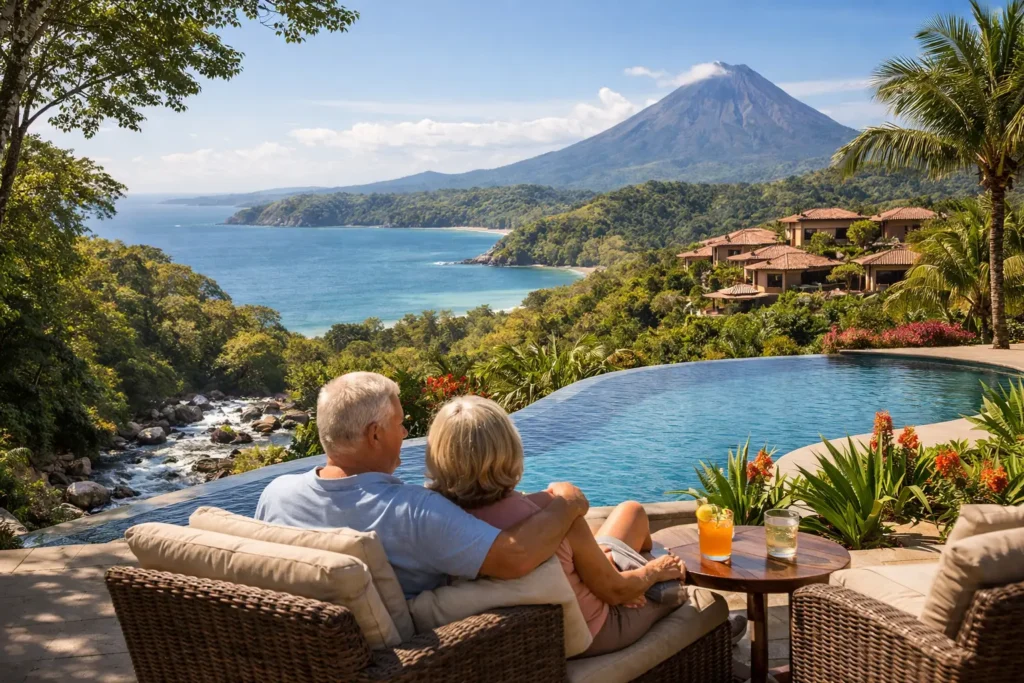
Retirement in Costa Rica can look very different depending on where you wake up. One buyer may picture coffee on a cool mountain terrace, while another wants to walk to the beach before breakfast. The best Costa Rica retirement communities are not defined by a single property type or expat population. They are places where your preferred pace of life, budget, access to services, and long-term comfort fit together.
For international buyers, the most rewarding decision is usually not choosing the first beautiful home they see. It is choosing a region that will still feel practical in five or ten years. Costa Rica offers established residential areas, gated developments, small coastal villages, and private rural estates. Each comes with real advantages, as well as trade-offs worth understanding before you purchase.
What Makes a Retirement Community Work in Costa Rica?
A retirement community may be a purpose-built development with shared amenities, but it can also be a welcoming neighbourhood where international and Costa Rican residents live year-round. In either case, convenience matters. Consider grocery access, medical care, roads, internet reliability, banking, restaurants, and the drive time to an airport or larger town.
Climate deserves equal attention. Costa Rica’s compact size can be deceptive: a home in the mountains may be pleasantly cool, while a coastal home less than an hour away can be warm and humid throughout the year. Many buyers enjoy the tropical heat at first, then discover that a higher elevation better suits daily walks, gardening, sleep, or visiting family from Canada.
The social side is personal. Some retirees want neighbours close by, planned activities, and an easy way to meet people. Others are looking for acreage, quiet, and a home surrounded by forest, fruit trees, or mountain views. Neither choice is better. The key is to be honest about how much privacy and how much connection you want in everyday life.
Best Costa Rica Retirement Communities by Lifestyle
Central Valley: Services, mild weather, and easy access
The Central Valley is often a strong fit for retirees who prioritize hospitals, shopping, professional services, and a spring-like climate. Areas such as Escazú, Santa Ana, Grecia, and Atenas offer different versions of that lifestyle, from upscale urban convenience to quieter small-town living.
This region can be appealing for buyers who expect frequent medical appointments, want a large selection of restaurants and stores, or prefer being closer to San José’s international airport. It also has established international communities, which can make the initial transition feel less intimidating.
The trade-off is that property near the capital can be more expensive, traffic can affect daily routines, and the experience is less remote than many people imagine when they picture Pura Vida. Buyers seeking lush privacy and a slower pace may prefer the southern Pacific or a mountain community outside the Central Valley.
Guanacaste: Dry-season sunshine and active beach living
Guanacaste attracts retirees who want a beach-centred lifestyle, a long dry season, and access to active coastal towns. Tamarindo, Playas del Coco, and surrounding communities offer restaurants, services, social opportunities, and a wide variety of condos and homes.
For a retiree who wants to play golf, meet friends for dinner, enjoy beach walks, or host visiting family, this can be an excellent match. The region also offers a more familiar resort-style atmosphere in some areas, with newer developments and managed communities.
However, the dry tropical landscape is much less green during parts of the year than the country’s southern regions. Prices in popular beach markets may also be higher, and the warm climate is not ideal for everyone. A well-designed home with shade, ventilation, and dependable water access becomes particularly important here.
Central Pacific: Beach access with a connected feel
The Central Pacific, including areas around Jacó and Los Sueños, offers a practical middle ground for buyers who want the coast without being too far from San José. It has established services, ocean activities, marinas, and residential options ranging from condominium living to luxury homes.
This area can suit retirees who value convenience and want an energetic environment. It is also a sensible choice for people who plan to use their property seasonally or welcome frequent guests. The main consideration is lifestyle fit: some communities are active and tourism-oriented, rather than quiet and residential year-round.
Costa Ballena: Nature, community, and a slower rhythm
For many buyers, the southern Pacific coast represents the more relaxed side of Costa Rican retirement. Uvita, Ojochal, and nearby communities are known for jungle-covered hillsides, beaches, waterfalls, wildlife, and a sizeable international residential presence. The setting supports a lifestyle built around nature, fresh food, outdoor living, and meaningful privacy.
Uvita offers a growing selection of everyday services, while Ojochal is often appreciated for its residential character and dining scene. Properties range from homes close to town to mountain-view residences and larger parcels with room for gardens, guest casitas, or a small personal project.
This is not a resort corridor with every service around the corner. Roads, slopes, rainfall, and distance to specialized care should be considered carefully. For the right buyer, those realities are part of the appeal: the reward is space, natural beauty, and a community that feels rooted in the landscape rather than built around mass tourism.
Pérez Zeledón: Cooler elevations and value beyond the coast
Pérez Zeledón, centred around San Isidro de El General, deserves attention from retirees who want more land, a cooler climate, and access to a full-service regional town. The area connects mountain communities, fertile valleys, and routes toward the southern coast, giving buyers a broader choice of settings than a beach-only search provides.
Retirees can find homes with mountain views, productive land, and a sense of authentic Costa Rican life, often with more value per square metre than in high-demand coastal locations. San Isidro provides shopping, banks, medical services, and the practical infrastructure that supports long-term living.
The lifestyle is quieter and more local than in major expat hubs. That is a significant advantage for buyers who want to integrate, but it may feel too removed for someone who expects a resort environment or wants many English-speaking social options within a few minutes of home.
How to Evaluate a Community Before You Buy
Start by visiting at the pace you expect to live. A two-hour tour can make every home look appealing, especially under a bright tropical sky. Stay nearby, drive the route to groceries and medical services, notice road conditions after rain, and ask what the neighbourhood feels like in green season as well as high season.
Look beyond the home itself. If you are considering a gated development, review the homeowners’ association structure, fees, rules, reserves, road maintenance, and any restrictions on pets, rentals, or construction. In a rural setting, confirm water source and access, internet options, drainage, topography, and the legal status of the road serving the property.
For resale, think about what future buyers may value too. A spectacular view can be a major asset, but steep access or a very isolated location can narrow the buyer pool. Conversely, a modest home near reliable services may be easier to manage and sell later. The best decision balances the dream with the details.
Buying With Confidence as an International Retiree
Foreign buyers can own property in Costa Rica, but the purchase process should be handled with careful local guidance. A qualified real estate professional can help you compare areas honestly, identify property conditions that affect value, coordinate viewings, and keep the process organized. Independent legal counsel should verify title, surveys, municipal status, corporate details where applicable, and closing documentation.
It is also wise to plan for the life that begins after closing. Banking arrangements, utilities, insurance, home maintenance, and trusted local contacts matter as much as the purchase agreement. Roca Realty CR supports buyers through these practical stages so that a move to Costa Rica feels prepared, not overwhelming.
The right retirement community should make ordinary days feel good: a comfortable drive to town, neighbours you enjoy, a climate that suits you, and a home that lets you live the Pura Vida life on your own terms. Give yourself time to experience each area, ask direct questions, and let the place that feels both inspiring and workable earn your confidence.