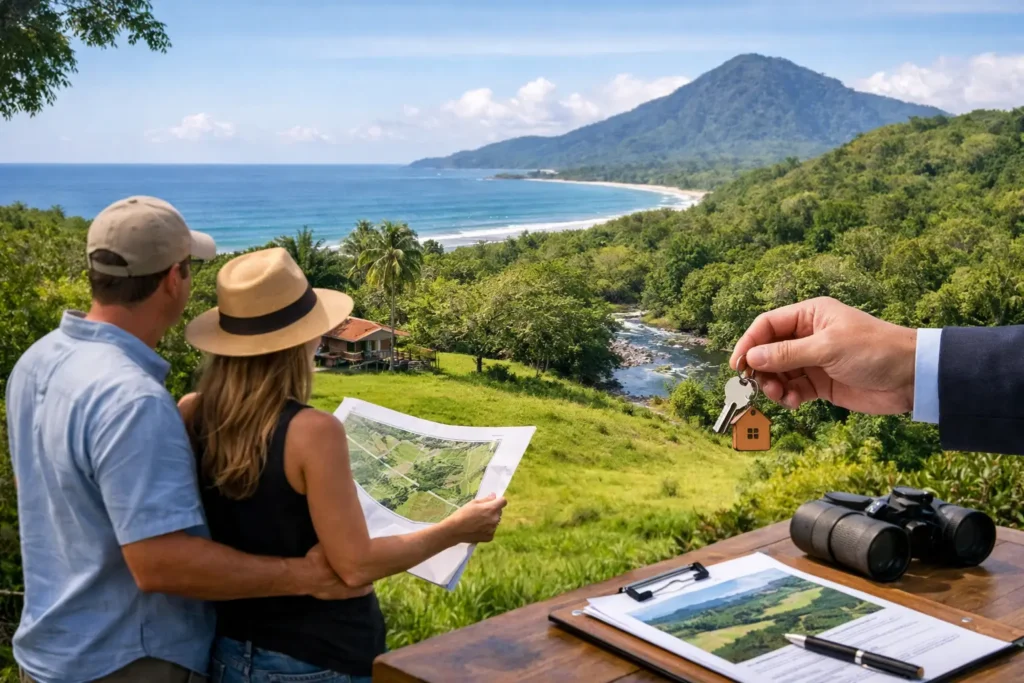
A beautiful parcel can look perfect from the road: rainforest at the edge of the property, mountain views in the distance, perhaps a creek below and the Pacific within reach. But when buying land in Costa Rica as an American, the view is only the beginning. The real value of a property depends on what can legally and practically be done with it – and whether its title, access, water, terrain, and services support the life or project you have in mind.
Costa Rica welcomes foreign buyers, and Americans can generally own titled real estate with the same ownership rights as Costa Rican citizens. That opportunity makes land an attractive choice for a future home, a private retreat, a farm, or a hospitality investment. It also makes careful local guidance essential. Land purchases deserve a patient process, especially outside established urban areas.
Buying Land in Costa Rica as an American: Begin With the Land Itself
Before discussing offers or ownership structures, get clear on the intended use. A site that is ideal for a quiet off-grid home may not suit a rental project, a working farm, or a family residence that needs reliable year-round access. In regions such as Pérez Zeledón, Uvita, Osa, Puerto Jiménez, and San Vito de Coto Brus, conditions can change dramatically from one valley, ridge, or coastal road to the next.
Ask practical questions early. How steep is the terrain? Is there a usable building area, or will substantial earthworks and retaining walls be required? Does the land receive dependable sunlight? What is the road like during the green season? Is the property close enough to schools, shops, medical care, or the beach for the lifestyle you want?
A property with privacy and sweeping views may involve a longer drive, higher construction costs, or more limited utility options. None of those factors automatically make it a poor purchase. They simply need to be understood, priced, and accepted before you commit.
Visit in Person and Look Beyond the Boundaries
A site visit should be more than a quick walk to the best viewpoint. Walk the proposed access route, inspect drainage, look for signs of erosion, and ask where neighbouring homes, roads, or future development could affect privacy. If possible, visit after rain or speak with nearby owners about seasonal conditions.
It is also wise to confirm that the boundaries seen on the ground correspond to the registered property and survey plan. Fences, planted trees, and informal markers do not always match the legal lines. A registered survey, commonly called a plano catastrado, is a central part of verifying what is actually being purchased.
Confirm Title, Restrictions, and Access Before Making It Personal
Costa Rican land can be titled property or concession property. Titled property is registered in the National Registry and can be purchased outright, subject to a proper legal review. Concession property is common in certain coastal areas and follows a different set of rules. It may offer an appealing location, but it requires specific review of the concession, its term, permitted use, and foreign ownership considerations.
Never assume a beachfront listing means direct private ownership to the water. Costa Rica’s Maritime Terrestrial Zone includes protected and restricted coastal areas governed by special regulations. The same caution applies to land near borders, protected areas, rivers, and public roads. A qualified Costa Rican real estate attorney should confirm the property’s legal status and any restrictions that apply to your plans.
Legal due diligence should include a title study through the National Registry. Your attorney will review the registered owner, liens, mortgages, annotations, easements, and recorded restrictions. They should also compare the registry information with the survey plan and investigate whether there are unresolved issues that could affect a transfer.
Road access deserves equal attention. A property may be physically reachable but lack legally registered access. If the route crosses another parcel, there should be a properly recorded easement. Do not rely solely on a seller’s assurance that everyone has always used the road. An access agreement that is not documented can become a serious problem later.
Water Is Often the Deciding Factor
For rural and semi-rural land, water availability can determine whether a parcel is ready to build on or only suitable for a more limited use. Municipal water systems, ASADA community water associations, registered wells, springs, and surface water each involve different conditions and approvals.
Ask where the water will come from, whether there is an existing connection or approved water availability letter, and whether the current supply is sufficient for your intended home or project. A nearby water line does not necessarily guarantee a connection. If a well is proposed, its feasibility, permits, and cost should be evaluated before the purchase is finalized.
Electricity, internet, drainage, and septic feasibility require similar care. Extending power to a remote lot can be expensive. Reliable internet may be readily available in one community and limited a few kilometres away. For a rental home, remote-work base, or hospitality project, these details directly affect usability and future market appeal.
Check Zoning and Building Feasibility
A parcel can have clean title and still be unsuitable for the construction you envision. Municipal zoning, land-use certificates, environmental rules, slope conditions, forest coverage, creek setbacks, and road frontage can all affect development.
For a simple private residence, the process may be straightforward. For multiple villas, cabins, a restaurant, agricultural operations, or a tourism business, the review needs to be more detailed. Bring your concept forward early, even if it is preliminary. It is far easier to choose land that supports the project than to redesign the project around an overlooked restriction.
Choose an Ownership Structure That Fits Your Situation
Americans commonly purchase property in their personal names or through a Costa Rican corporation. Neither option is automatically better. The right choice depends on estate planning, liability considerations, the number of buyers, future use, financing arrangements, and advice from professionals familiar with your broader financial circumstances.
A corporation can be useful when multiple people will own the property or when the land will support a business activity. It also creates ongoing obligations, including annual filings, legal representation, and tax compliance. Personal ownership may be simpler for a straightforward residential purchase. Your attorney and tax advisers in Costa Rica and at home can help you understand the implications before you decide.
Avoid treating a corporation as a shortcut around due diligence. Whether title is transferred to you personally or to an entity, the land still needs the same careful review.
Make a Clear Offer and Protect the Closing Process
Once you have identified a suitable parcel, a well-written purchase agreement is the foundation of a secure transaction. It should clearly identify the property, purchase price, payment schedule, closing date, conditions for due diligence, and responsibilities of both buyer and seller. If the offer depends on water confirmation, a title review, a survey issue, or another key finding, those conditions should be stated in writing.
Funds should be handled through a secure, documented process. International buyers should expect requests for identification, source-of-funds information, and banking documentation. These requirements are part of Costa Rica’s compliance environment and help make the transaction safer for all parties.
Closing costs vary with the property value, transaction structure, legal work required, and registration expenses. Buyers should request an estimated closing statement before moving forward, rather than relying on a broad percentage quoted early in the search. Annual property taxes, potential luxury-home tax obligations, corporation costs, maintenance, road fees, and utility installation should also be considered as part of the long-term budget.
A Practical Land-Buying Checklist
Before releasing final funds, confirm that your professional team has addressed these core points:
- The seller has legal authority to transfer the property and title has been reviewed.
- The registered survey plan, physical boundaries, and legal access are consistent.
- Water, electricity, internet, and septic options suit the intended use.
- Zoning, environmental conditions, and building feasibility have been investigated.
- The purchase agreement, escrow process, and closing costs are clear in writing.
This preparation is not meant to take the joy out of finding your place in Costa Rica. It is what allows you to enjoy it with confidence. The right piece of land can become a home surrounded by birdsong, a productive farm, a private family gathering place, or the beginning of a carefully planned investment.
At Roca Realty CR, we believe the best land purchase begins with listening closely to what you want to create, then asking the practical questions that protect that vision. With the right property and the right local support, your Pura Vida plan can move from a distant idea to solid ground.